
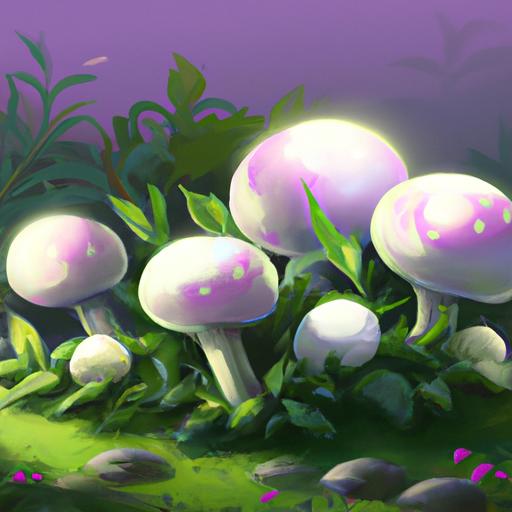
Button mushrooms are a type of fungi found in grocery stores all over the world.
But, are they prokaryotic or eukaryotic? In this article, we’ll uncover the answer and explore the world of button mushrooms.
We’ll look at what distinguishes prokaryotic from eukaryotic organisms, as well as their nutritional benefits.
We’ll also provide some delicious recipes for cooking with button mushrooms, and answer some common questions about them.
Join us as we take a journey into the fascinating world of button mushrooms!
Table of Contents
Short Answer
No, button mushrooms are not prokaryotic.
Prokaryotes are single-celled organisms, such as bacteria, while button mushrooms are fungi, which are eukaryotic.
Eukaryotes have a defined nucleus with a membrane, and complex structures within the cell, while prokaryotes lack these features.
Button mushrooms contain cell walls made of chitin, which is not found in prokaryotes.
What are Button Mushrooms?
Button mushrooms, also known as Agaricus bisporus, are a type of fungi that are widely consumed around the world.
They have a white, firm cap and a mild, earthy flavor that makes them a popular ingredient in many dishes.
Button mushrooms are a source of essential vitamins and minerals, including vitamin B, potassium, and zinc.
They also contain antioxidants which can help protect against certain diseases.
Button mushrooms are low in calories and fat, making them a healthy choice for a variety of diets.
Button mushrooms are widely cultivated in dark and humid environments, such as caves, greenhouses, and mushroom beds.
They can also be found growing wild in areas with the right conditions.
Button mushrooms can be used in many different dishes, and their flavor can be enhanced through sauting, roasting, or grilling.
Are Button Mushrooms Prokaryotic or Eukaryotic?

When it comes to the question of whether button mushrooms are prokaryotic or eukaryotic, one can be sure that mushrooms are in fact eukaryotic and not prokaryotic.
This means that they contain membrane-bound organelles and are organized into distinct nuclei, which are features that prokaryotic organisms lack.
Button mushrooms, also known as Agaricus bisporus, are classified as a type of fungus and come in a variety of colors, shapes, and sizes.
They are extremely versatile and can be enjoyed both raw and cooked, depending on the desired texture and flavor.
Button mushrooms are an edible species of mushroom commonly used in cooking and have a variety of nutritional benefits.
The most important thing to note when it comes to button mushrooms is that they are eukaryotic, meaning they contain a nucleus and other organelles, such as mitochondria, that are surrounded by a membrane.
This is in contrast to prokaryotic organisms, which do not have a nucleus or organelles.
Instead, they have a single strand of genetic material, called DNA, that is not separated by a membrane.
Button mushrooms are able to reproduce through a process called spore formation, where the mushroom releases microscopic spores into the air, which then germinate and grow into new mushrooms.
This process is only possible in eukaryotic organisms and would not be possible in prokaryotic organisms.
In conclusion, it is clear that button mushrooms are eukaryotic and not prokaryotic.
They contain membrane-bound organelles and are organized into distinct nuclei, which are features that prokaryotic organisms lack.
Button mushrooms are an edible species of mushroom commonly used in cooking and have a variety of nutritional benefits.
What Distinguishes Prokaryotic from Eukaryotic Organisms?
When it comes to distinguishing different types of organisms, one of the key factors to consider is their cellular structure.
Prokaryotic organisms, such as bacteria, are much simpler in structure than eukaryotic organisms, such as plants and animals.
Prokaryotic cells lack a nucleus and membrane-bound organelles, and instead rely on a single, circular strand of DNA for genetic information.
In contrast, eukaryotic cells have a membrane-bound nucleus, as well as other membrane-bound organelles, such as the endoplasmic reticulum and mitochondria.
These organelles are responsible for carrying out essential cellular functions, such as producing energy and synthesizing proteins.
In addition to their structural differences, prokaryotic and eukaryotic organisms also have different methods of reproduction.
Prokaryotic organisms reproduce asexually, meaning that they do not require a mate in order to reproduce.
Eukaryotic organisms, on the other hand, reproduce sexually, requiring two different sexes in order to reproduce.
Finally, prokaryotic and eukaryotic organisms also have different methods of obtaining food and energy.
Prokaryotic organisms are typically autotrophic, meaning that they are able to produce their own food and energy from inorganic sources.
Eukaryotic organisms, on the other hand, are typically heterotrophic, meaning that they must obtain their food and energy from other sources, such as plants and animals.
Now that we have discussed the distinguishing features of prokaryotic and eukaryotic organisms, let’s turn our attention to the question of whether or not button mushrooms are prokaryotic.
Are Button Mushrooms Edible?

When it comes to button mushrooms, the answer is a resounding yes! Also known as Agaricus bisporus, button mushrooms are a type of fungus that belongs to the family Agaricaceae.
They have a mild flavor and are commonly used in cooking, making them a popular choice for home chefs.
Not only are they tasty, but they also offer a variety of nutritional benefits.
Button mushrooms contain essential vitamins and minerals like copper, potassium, and magnesium, as well as dietary fiber.
They are also a good source of protein and can be a great addition to a balanced diet.
Button mushrooms are also low in calories, making them a great choice for those looking to control their weight.
They are also a good source of antioxidants, which can help protect your cells from damage caused by free radicals.
Plus, they contain compounds that can help boost immunity and reduce inflammation.
When it comes to cooking with button mushrooms, the possibilities are endless.
They can be sauted, roasted, grilled, or even stuffed.
They can also be added to soups, stews, salads, and sauces to add flavor and texture.
No matter how you choose to prepare them, button mushrooms are sure to be a hit.
What Are The Nutritional Benefits of Button Mushrooms?
Button mushrooms have a variety of nutritional benefits that make them a great addition to any diet.
Not only are they low in calories, but they are also a great source of vitamins, minerals, and antioxidants.
As a result, button mushrooms are linked to a variety of health benefits, such as improved immune system function, better heart health, and reduced inflammation.
The high vitamin content in button mushrooms makes them especially beneficial.
Button mushrooms are an excellent source of vitamin B complex and vitamin D, as well as several other minerals.
Vitamin B complex helps support the bodys metabolism, while vitamin D is necessary for strong bones and teeth.
Minerals such as selenium, copper, and potassium are also found in button mushrooms, which are essential for proper cellular functioning.
In addition to being a great source of vitamins and minerals, button mushrooms also contain powerful antioxidants.
Antioxidants help protect the body from oxidative stress and help reduce the risk of chronic diseases.
Research has shown that button mushrooms contain compounds such as ergothioneine and glutathione, which are both powerful antioxidants that can help protect the body from oxidative damage.
Button mushrooms are also a great source of dietary fiber, which is essential for a healthy digestive system.
Fiber helps keep you feeling full longer, which can help with weight management.
It also helps promote regular bowel movements and can help reduce cholesterol levels.
Overall, button mushrooms are a great addition to any diet.
Not only are they low in calories and a great source of vitamins, minerals, and antioxidants, but they are also a good source of dietary fiber.
All of these benefits make button mushrooms an excellent choice for a healthy and balanced diet.
Suggested Recipes Using Button Mushrooms

If youre looking for a delicious way to incorporate button mushrooms into your diet, youve come to the right place.
Button mushrooms are a nutritious, versatile ingredient that can be incorporated into a variety of dishes.
From classic Italian dishes to Asian-inspired stir fry dishes, button mushrooms can be used in a variety of recipes.
Here, well take a look at some of the most popular recipes featuring button mushrooms.
One of the most popular ways to use button mushrooms is in a classic Italian dish known as Pizza con Funghi.
This dish is made with a thin, crispy crust, topped with a rich tomato sauce, mozzarella cheese, and a generous helping of button mushrooms.
You can also top the pizza with other ingredients, such as olives, artichokes, or fresh herbs.
Its a delicious meal thats sure to please the entire family.
Another delicious way to use button mushrooms is in a creamy risotto.
Risotto is a classic Italian dish made with arborio rice and a variety of other ingredients.
To make a delicious mushroom risotto, youll need to saut button mushrooms in butter or olive oil, add in arborio rice, and then slowly add in vegetable or chicken broth.
You can also add in other ingredients such as peas, onions, and garlic.
The result is a creamy, delicious risotto with a rich, earthy flavor.
Asian-inspired stir fry dishes are also a great way to use button mushrooms.
To make a flavorful stir fry, youll need to start by sauting button mushrooms in a wok or large skillet.
Then, add in your favorite vegetables, such as carrots, bell peppers, broccoli, and snow peas.
You can also add in some protein, such as shrimp or chicken.
Finally, season the stir fry with soy sauce, ginger, and garlic.
Serve the stir fry over a bed of steamed white rice and enjoy!
Finally, button mushrooms can also be used in soups and stews.
To make a hearty, flavorful mushroom soup, youll need to start by sauting button mushrooms in butter or olive oil.
Then, add in a variety of vegetables, such as onions, carrots, celery, and garlic.
To give the soup a richer flavor, you can also add in a splash of white wine or brandy.
Finally, add in chicken or vegetable stock and simmer until the soup is hot and flavorful.
Serve the soup with a sprinkle of fresh herbs and enjoy!
As you can see, there are many delicious ways to incorporate button mushrooms into your diet.
Whether youre making a classic Italian dish or a flavorful Asian-inspired stir fry, button mushrooms are an incredibly versatile ingredient that can be used in a variety of dishes.
So, go ahead and get creative in the kitchen youll be amazed at the delicious dishes you can make with button mushrooms!
Common Questions About Button Mushrooms
When it comes to button mushrooms, there are many questions that people have.
Are they prokaryotic? What kind of nutritional benefits do they offer? How are they used in cooking? In this blog post, well take a look at all of these questions and uncover the answers so you can have a better understanding of button mushrooms.
First, lets answer the question of whether button mushrooms are prokaryotic or not.
The answer is no.
Button mushrooms, also known as Agaricus bisporus, are classified as a type of fungus and are eukaryotic, not prokaryotic.
This means that they contain membrane-bound organelles and are organized into distinct nuclei, which are features that prokaryotic organisms lack.
Now lets explore the nutritional benefits of button mushrooms.
Button mushrooms are low in calories and fat, and they are an excellent source of fiber, B vitamins, and minerals such as potassium, magnesium, and iron.
Additionally, button mushrooms have antioxidant properties and are a good source of selenium, which is important for the immune system.
Finally, lets look at how button mushrooms are used in cooking.
Button mushrooms are a versatile ingredient that can be used in everything from soups and salads to pizzas and casseroles.
They are also a great addition to stir-fries, pasta dishes, and sauces.
Button mushrooms can also be eaten raw or lightly cooked, depending on your preference.
So to answer the question, Are button mushrooms prokaryotic? the answer is no.
Button mushrooms are a type of fungus and are eukaryotic, not prokaryotic.
They offer a variety of nutritional benefits, and they can be used in a variety of different dishes.
Hopefully this blog post has helped you gain a better understanding of button mushrooms.
Final Thoughts
Button mushrooms have a variety of nutritional benefits, making them a great addition to any meal.
Not only are they edible, but they are also eukaryotic, meaning they contain membrane-bound organelles and are organized into distinct nuclei.
However, they are not prokaryotic, and this is what distinguishes them from other organisms.
Now that you know the answer to the question, “Are Button Mushrooms Prokaryotic?” why not try adding them to your next meal? There are plenty of recipes incorporating button mushrooms that you can try, so get cooking!